

I have always been one of those people who is sensitive to extreme temperatures and sudden changes in temperature.? During extremely cold winters, despite indoor heating and several layers of clothing, I can never seem to get warm.? Sometimes I get so cold I can’t think about anything else but how cold I am.? On the flip side, while I enjoy the warmer spring and summer weather, I can’t stand being stuck outside in the heat.? I get tired and cranky, and must go inside.? I really would have been better off living somewhere with milder weather?here in PA we have very cold winters and very hot summers?sometimes with little to no transition.? Like last week.
This year, it seemed like winter would never go away?it was cold and damp and miserable out.? Then all of a sudden I woke up one morning and it was not spring, it was summer.? What ever happened to the weather gradually getting warmer before it gets hot?? You know?spring?? Well my body wasn?t having it, and it let me know with a horrible prickly heat rash.
 |
| Sooo not when you want to get prickly heat. |
I’ve had it before?usually after exposure to drastic rises in temperature.? Like on my honeymoon, for instance.? My body didn’t like the hot Caribbean climate as much as I did (in an otherwise chilly April) and I got prickly heat all over my face and neck.? Convenient, right?? Well back then I went to the cruise ship doctor (who had a cool Scottish accent) and he gave me some oral medication (probably a steroid of some kind but at that time I didn’t care) which you would think would have fixed me right up, but no.? I was stuck with a red, itchy rash for a good part of my honeymoon.
What is prickly heat?
Prickly heat, otherwise known as heat rash or miliaria rubra (if accompanied by tiny red bumps), is pretty much what it sounds like.? A rash that breaks out on certain places of the body that is extremely itchy and sometimes downright painful, and is characterized by tiny pin-point bumps that are typically pink or red, but can also be clear, or white or yellowish.? Redness can also occur.
Prickly heat is normally brought on by exposure to excessive heat and humidity, but can sometimes come after a drastic temperature change from cold to very hot and humid, which is when I usually get it.? It is caused by a blockage of the sweat glands within the hair follicles (which cover the majority of our bodies) which traps the sweat in the skin.
According to the website eMedicinehealth.com, human sweat is a very potent skin irritant due to its high salt content, and may cause skin rashes if it is not washed off.? Furthermore, sweating is an excretory function of the body.? It helps the body rid itself of toxins.? The saltiness of sweat, in combination with these toxins causes irritation and inflammation when trapped in the follicles, thus causing prickly heat and sometimes other reactions like heat urticaria (hives).
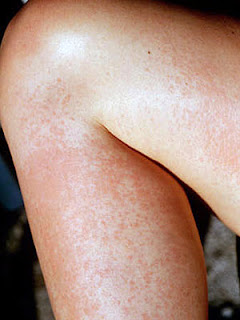 Although prickly heat is most common in babies and children (due to immature sweat glands), adults certainly get it.? I never got it as a child, but my kids have had minor cases of it.
Why does the blockage occur?
This blockage could be caused by several things such as bacteria or built-up dead skin cells, but can also have internal causes such as a highly acidic or inflammatory diet, Candida overgrowth (here it is again), and dehydration just to name a few.? Some say that smoking and excessive alcohol consumption can put adults at a higher risk.
How do you get rid of it?
Often, prickly heat will go away fairly quickly on its own; but in some cases (my cases, for instance) it can last a few days.? Many doctors will prescribe a steroid or antibiotic either orally or topically (depending on how widespread the rash is), which can sometimes help with the itching and irritation, but can cause other problems down the line.? I personally opt to manage the symptoms with common sense and some effective natural remedies.
Some common sense steps to take:
???? Get out of the heat and remove extraneous clothing
???? Wear loose, breathable clothing
???? Take tepid, lukewarm or cool baths or showers (as cool as you can stand it)
???? Avoid skin to skin contact (with your own skin or anyone else?s)
???? Do not use heavy emollient moisturizers that occlude (sit on the surface of) the skin?use something light and water based if you feel you must moisturize, although it?s usually best not to use any products on the affected area other than natural topical remedies.
???? If you ignore my last suggestion and do use a moisturizer, it must not contain any irritant, comedogenic (pore clogging), allergy-causing or petrochemical ingredients.
???? Apply cool compresses and stay inside in a cooler, drier environment when possible.
???? When outside, wear loose, breathable, protective clothing and limit exposure to the sun.
???? Drink lots of water to help cool yourself down and maintain your body temperature

???? Don’t scratch!? Scratching can break the skin which can cause infection (especially if the blockage is caused by bacteria or another yucky microorganism), will make the rash more uncomfortable, and will make it last longer.? Wear oven mitts if you can’t resist (remember that Friends episode with the chicken pox?).
?
And here are some natural remedies:
???? Take cool oatmeal baths twice a day
???? Apply pure aloe vera gel to the area?it will let the skin breathe, soothe the irritation, and protect the area from further irritation.
???? Spray the area or frequently apply cold compresses soaked with a toner or freshener made with soothing and anti-inflammatory ingredients (no alcohol) like colloidal silver, lavender, green tea (you can drink freshly brewed iced green tea too?yummy), tea tree, calendula, chamomile, ginko biloba extract, witch hazel, grapeseed extract, olive leaf extract, and elder flower.? You can get these from natural skin care companies (Hylunia?s toners are great), but it?s not hard to make your own.
???? Take vitamins A, C, E, and niacinamide
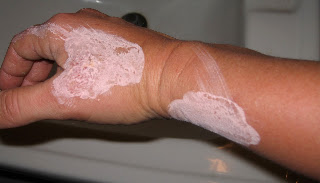 |
| Pretty…Not. |
???? Apply pure Fuller?s Earth Clay?let dry and leave it on.? This clay has amazing properties of absorption and detoxification and will help pull the blockages out of the follicles, as well as any toxins and other causes of the blockages.? It will also cool and soothe the area, and reduce the itching.? No, it?s not attractive, but neither is calamine lotion, right?
Know when to get it checked out?
Prickly heat, as well as other skin rashes that do not go away after a few days should be checked out by your healthcare provider.? Though most rashes are caused by some type of irritant or allergic reaction, some can indicate something more serious that would require a different type of treatment.? Don’t let it go?when in doubt, get it checked out.
*Balch PA, Balch JF. 2000. Prescription for Nutritional Healing, third ed. New York: Avery; 634.


