
 This winter has been one of the coldest and snowiest ever. I do live in the northeastern United States, so really, no winter is warm–but it seems like this winter has affected more areas of the country with below-freezing temperatures, accumulation of snow, and unplanned days off from school and work (though that’s not necessarily a bad thing).
Warmer air => drier body
Another “side effect” of the weather being colder outside is that the air must be kept warmer inside both at at home and at school or work. Many homes and most buildings use forced air heating, which is very dehydrating to the entire body.
 Even other sources of indoor heat can be drying to the skin and to the entire body, causing symptoms like nosebleeds, reactive mucus (runny noses, phlegm), dry eye, and especially dry skin. And when I say dry skin, I mean skin so dry that it doesn’t just feel tight and itchy, it downright hurts. Topical moisturizers can be very helpful in strengthening the skin’s barrier from the outside in, and there are some ways to hydrate from the inside out as well. Like anything else having to do with the skin, it’s important to address the problem both ways.
Here are 4 ways to hydrate even the driest skin from the inside out and outside in:
- Drink more water. In my book, Love Your Skin, Love Yourself and in this post I share a great formula for making sure you drink enough water for your body weight and levels of activity. However, when the air is cold and dry, you may have to drink even more since the dry air pulls the air out of your body via the skin and any open passages (nostrils, open mouth, eyes, etc).
-

Great collagen and hyaluronic acid supplements from NeoCell Take supplements to lock in moisture. Dehydration starts at the cellular level. Certain supplements, like hyaluronic acid (make sure you get pharmaceutical grade) have humectant properties which bind great amounts of water to cells in every system of the body. Others, like collagen and also essential fatty acids like Omega 3 or evening primrose oil help to strengthen the cell membranes to keep the moisture in and prevent transcellular water loss.
- Don’t over-exfoliate. The layer of flaky “dead” skin cells (stratum corneum) that people often rush to exfoliate with harsh scrubs and acids are there for a reason: protection. During the winter, especially, the skin becomes dehydrated due to evaporation of moisture through the skin–also known as transepidermal water loss (TEWL). Those flaky cells (corneocytes) function as armor by trying to keep moisture in and harmful invaders out. Scrubbing or stripping away this important layer makes the skin more susceptible to damage, dehydration, and irritation during the cold, dry months. Instead of exfoliating it away, try following the above tips and also make sure you…
- Moisturize, moisturize, and moisturize some more! In the winter you can’t moisturize your skin enough. This can be done by using a humidifier in your bedroom or office, and also by topically applying moisturizer at least 1-2 times a day. Moisturizer is what strengthens the skin’s lipid barrier and helps to seal moisture in and prevent evaporation and dehydration. It’s best to do it when the skin is damp after a bath, steam or shower to lock in that extra water. Use an all-natural moisturizer that doesn’t contain drying ingredients like alcohol or irritant ingredients like alpha hydroxy acids or synthetic fragrances. You want all-natural plant-based butters and oils and if you want to scent it, use high quality?essential oils.

 BONUS RECIPE: Holistically Haute Dry Skin Souffle
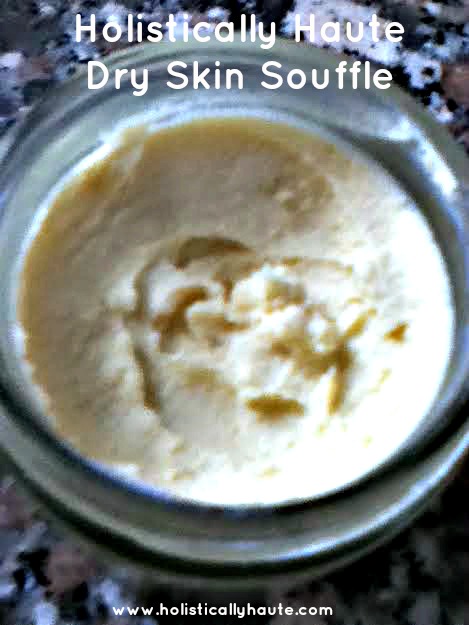
Supplies needed :
- A glass jar–4 or 8 oz is preferred
- A small saucepan
- A small whisk
Ingredients:
- 1 part shea butter
- 1 part coconut oil
- 15-30 drops of essential oils–the ones I like best for dry skin are Frankincense, Helichrysm, Geranium, and Lavender. For a 4 oz jar, use 15 drops, for an 8 oz jar, use 30 of your favorite of these essential oils, or a blend of them.

Instructions:
- Heat your saucepan over a very low flame.
- Add equal parts of shea and coconut oil and whisk gently until completely melted.
- Remove from heat and add your essential oils, one by one, stirring gently.
- While the mixture is still liquid, pour into your jar(s). Close the jar immediately and allow to cure overnight. Use generously the next day. This should have a consistency that is a little lighter/airier than a salve–like a souffle!
Just a little caution about Geranium–some people find the scent overpowering, so start with a drop or two, add more oils, and then add more Geranium if you want. Remember you want this to smell good too! People are far more likely to use a product that smells good than they are to use one that stinks.
Supplies, and ingredients are?available at Mountain Rose Herbs.


2 thoughts on “4 Ways to Hydrate Super-Dry Skin–Plus a Recipe!”
Seems really nice, I love the “souffl?” texture for a deep moisturizing cream/ butter =)
Thanks! So do I…it’s decadent!